
A new West Asia is emerging and India must engage at the highest level and help shape this change, says Saeed Naqvi

In anticipation of a verdict to be delivered by the International Tribunal of the Permanent Court of Arbitration in The Hague on Tuesday, China has orchestrated a worldwide campaign to defuse its findings.

'While Television generally tends to Clarity,' says Sreehari Nair, 'Arnab Goswami's The Newshour Debate portrays our confusions. Each episode offers both the potency of an intensely-fought boxing match and the giddy pleasures of an orgy.'
Why are more and more young people quitting their day jobs to travel? Abhishek Mande Bhot finds out.

'The defence minister needs to focus on human resources-related issues at the same pace in 2017 as he did on acquisitions in 2016,' says Brigadier S K Chatterji (retd).

'Those who have followed politics even when there was no Twitter know what the word 'jumlebaaz' means,' says Utkarsh Mishra.

When Meenakshi Arvind and Mookambika Rathinam took an epic car journey from Coimbatore to London, they encountered a world that was more good than bad. In the cry for freedom in a dark corner of the globe, they discovered that The Mahatma remained India's greatest icon.

'Public dissent is the highest public duty and I will continue to speak out,' says Harsh Mander.

India should enhance its economic, cultural and defence ties with Mongolia. It is high time Modi should focus on gaining clout in smaller Asian countries such as Mongolia. It is in this context, India's engagement with Mongolia would give much-needed impetus to India's foreign policy, says Sana Hashmi.

The ground situation in Iraq is so bad that there is no scope for any non-conventional action or any kind of bravery. Patience, slow movement, and full backing to Indian negotiators would help in a big way, says Sheela Bhatt.

The floods that engulfed the state of Jammu and Kashmir have been unprecedented in its history. In fact, the deluge of rains suffered by the state was at par --- and in some case, far worse --- than what was witnessed in Uttarakhand in June last year.

'The BJP portrays a make believe world.' 'The Tripura victory is being seen by some as a result of bahubal and money power -- but that would be a very simplistic explanation.' 'Money and muscle power can play a role up to a point, but the BJP's victory is remarkable because it replaced a party that was in power for 25 years.'

'The use of nuclear/biological/chemical weapons by Islamic terrorists is just a matter of time.' 'It must be clearly understood what the world faces is a global level insurgency against the world order.' 'Terrorism is merely a tactic and Islamic State its most brutal face, says Colonel Anil A Athale (retd).

The church bells don't toll in Churachandpur any more. The hill district in Manipur has been in mourning for more than a year.

'Her greatest strength is not her acting or her dancing abilities, but that she has an incredible number of fans.'
'History will never forgive Manmohan Singh for having ended the Indian growth story and created a culture of entitlement instead of creating a culture of hard work and development,' says Colonel Anil A Athale (retd).

as the trial proceeds, Peter is beginning to look more and more haggard while Indrani by contrast is blossoming. Khanna appeared exhausted and more down and out than usual at this hearing.

The Bharatiya Janata Party seems to have learnt a bitter lesson from its past mistake of letting down the people of Telangana for the sake of the Telugu Desam Party's support to the Atal Bihari Vajpaee-led National Democratic Alliance government. This time it is refusing to do the same.

Nepalese Prime Minister Sushil Koirala was greeted with protests on Wednesday at in relief camps as anger spilled over to the streets.

How the BJP's politics plays out at the grass-roots level will determine its relationship with Muslims in the near future, says Sajid Bhombal
The government on Wednesday unveiled the FTP for 2015-20.

President Xi Jinping's visit may put relations between India and China on a new trajectory

'Until India fully absorbs the fundamentals of international relations, it will continue to get evil for good,' says Brahma Chellaney.

Refuting allegations of divisions in the Congress in Rajasthan, Corporate Affairs Minister and Member of Parliament from Ajmer, Sachin Pilot, speaks to Kavita Chowdhury on a range of issues, including the Congress's prospects in the coming Rajasthan Assembly polls.
'If, in the first 48 to 72 hours, they are just on a wild goose chase, then Gauri Lankesh's murder will not get solved.'

anata Dal-United president Sharad Yadav says leaders of all 11 parties who've formed a new front will meet after the current Parliament session to finalise a name, coordination strategy and programmes. Mayank Mishra reports

'For so long as the rulers of Pakistan remain committed to confronting and vanquishing India, they will sustain delusions, breed terrorists, and export them.'

COP 21 is about how much carbon space is left and who gets how much of that space
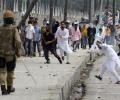
'The so-called separatists are representatives of Pakistan. They get paid from Islamabad for propagating that country's policy and conniving in her ploy of accession of Kashmir to Pakistan.'

'One hopes the younger generation sees Savarkar him for what he was and does not view him through a distorted prism.' 'This is the least one could do for someone who devoted his whole life to Indian freedom struggle, elimination of caste, succour to Dalits, and instilling of strategic culture in India,' says Lieutenant General Ashok Joshi (retd) and Colonel Anil A Athale (retd).

From 17 pre-school centres to 285 in less than five years - Hippocampus has brought the joy of learning to kids.

'As the first leaders of their respective countries born after Indian Independence and the Chinese Liberation, Modi and Xi would be expected to have the ability to overcome the traditional mindsets and the hierarchical nature of their official/bureaucratic establishments,' say Alka Acharya and Jabin T Jacob.

If things work out, it will be a great leap forward in the Indian-Iranian economic ties in the new phase of Iran's reintegration with the world market following the lifting of sanctions, says Ambassador M K Bhadrakumar.

In his last column for Rediff.com, Praful Bidwai joins issues with those lauding India's covert operation against Naga rebels based in Myanmarese territory.

The BRICS summit offers Modi an excellent platform to reach out to world leaders and conduct diplomacy on the very ticklish issue of reform of the world governance structure, and to exchange notes with his peers on international, regional and bilateral issues on the margins of the meeting, says Rup Narayan Das.
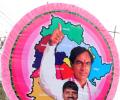
With almost 300 seats to the Lok Sabha being dominated by regional outfits, the Congress has added to the list by giving space to more regional forces in the Seema-Andhra and Telangana regions, says Saroj Nagi.

The Enforcement Directorate has managed to sniff out over Rs 9,000 crore as suspected haul from money laundering in a decade, but it has yet to link those against anyone successfully in a court.
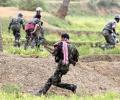
All Naxal-affected states demonstrate police as well as governance incapacities. Odd occasions of success and temporary dip in Naxal violence notwithstanding, the states have utterly failed to dominate and make their presence felt over areas under the extremist domination, says Bibhu Prasad Routray.

Without civilisational moorings, India, more a sub-continent than a country, could not exist. Primacy of Dharma has been the cornerstone of Indian civilisation, says Colonel Anil A Athale (retd).

'Tibet remains a prickly issue between the giant Asian nations. China still claims more than 80,000 sq kilometres of Indian territory in the Northeast. Why? Just because Beijing refuses to acknowledge the McMahon line which separates India and Tibet, and this, simply because the 1914 Agreement delineating the border was signed by the then government of independent Tibet with India's then foreign secretary (Sir Henry McMahon),' says Claude Arpi.
